What Is a Central Tire Inflation System (CTIS) and Does Your Fleet Need One?
If you manage a fleet of heavy-duty trucks — whether they haul concrete, support utility crews, work agricultural land, or serve municipal operations — you already know that tires are one of your biggest operational costs. What you may not know is that a significant portion of tire damage, excessive fuel consumption, and vehicle downtime is directly linked to one overlooked variable: tire pressure.
That’s where a Central Tire Inflation System, or CTIS, comes in. In this article, we’ll break down exactly what CTIS technology is, how it works, which industries benefit most from it, and how to determine whether your fleet needs one.
What Is a Central Tire Inflation System?
A Central Tire Inflation System (CTIS) is an onboard technology that allows drivers or fleet operators to adjust the air pressure in a vehicle’s tires while the vehicle is stationary or, in some advanced systems, while it’s in motion. Rather than manually checking and adjusting each tire at a service station, a CTIS does the work automatically or on-demand from inside the cab.
At its core, a CTIS connects the vehicle’s air supply system to each wheel end through a series of rotary seals, airlines, and valves. The driver controls pressure settings through a display panel or touchscreen interface, selecting the right pressure for the terrain or road conditions ahead.
How Does a CTIS Work?
The system typically consists of several key components working together:
- Control unit or touchscreen interface — where the driver inputs the target tire pressure
- Wheel end valves — located at each tire, these open and close to allow air in or out
- Rotary unions and airlines — sealed pathways that carry compressed air to each rotating wheel
- Pressure sensors — real-time monitoring that confirms when the target pressure is reached
- Air source — typically the vehicle’s existing air brake system
When the driver selects a lower pressure setting — such as switching from highway mode to job site mode — the system releases air from all tires simultaneously down to the target PSI. When it’s time to return to the road, the system inflates all tires back up to highway-safe pressure. The entire process is controlled from the cab, with no manual labor required.
Air Down and Air Up: Two Sides of the Same System
A well-designed CTIS handles both directions of pressure management:
- Air Down: Reduces tire pressure for off-road terrain, soft ground, or job sites where traction is critical. Lower pressure increases the tire’s contact patch with the ground, improving grip and reducing the risk of getting stuck.
- Air Up: Restores tires to highway-safe pressure before the vehicle returns to public roads. Running underinflated tires at highway speeds causes rapid tread wear, heat buildup, and blowout risk.
Both functions are essential. A system that only airs down without a reliable way to air back up creates a serious operational and safety liability.
Which Industries Benefit Most from CTIS Technology?
Central tire inflation systems were originally developed for military vehicles that needed to traverse multiple terrain types without stopping. Today, several commercial industries rely on the same technology:
Concrete and Construction
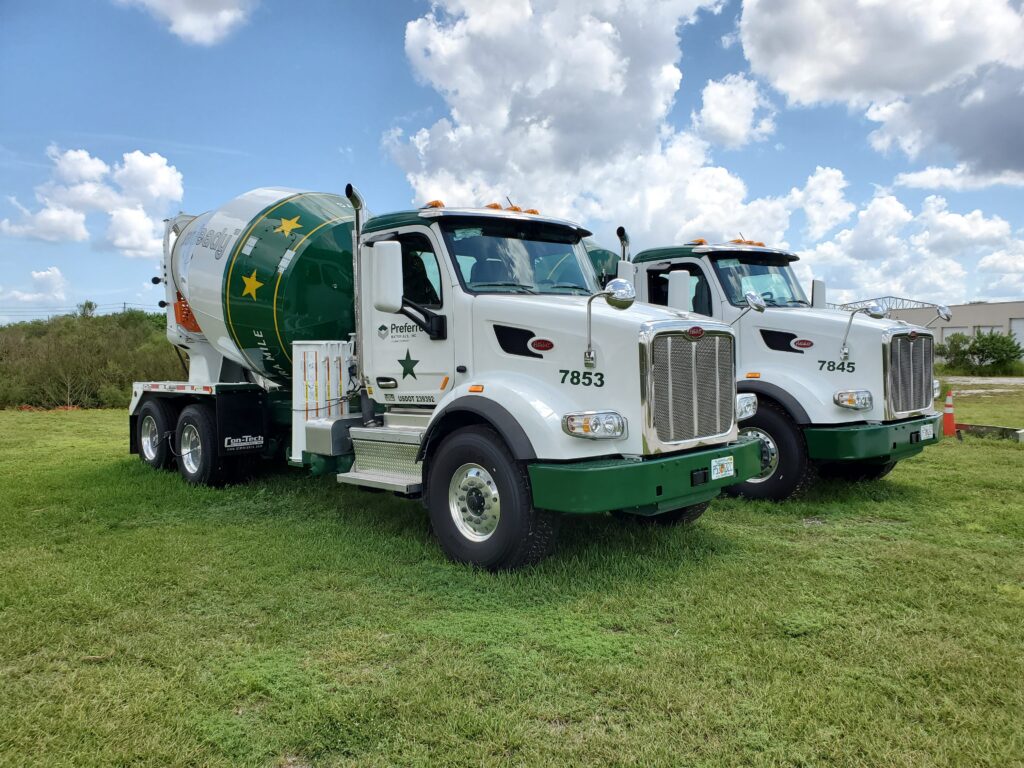
Concrete mixer trucks regularly move between paved roads and active job sites — often unpaved, uneven, or saturated ground. CTIS allows drivers to lower pressure on arrival at the site for better traction and stability, then re-inflate before heading back to the plant or onto the highway.
Power and Utility
Utility trucks often access remote or rugged terrain to service power lines, pipelines, and infrastructure. These vehicles need the flexibility to operate in the field without the delay of manually adjusting tire pressure at every stop.
Farming and Agriculture
Farm vehicles transition between field and road constantly. Running at highway pressure on soft soil compacts the ground and damages crops. Running at field pressure on the road destroys tires and wastes fuel. A CTIS makes the transition seamless.
Municipalities
Municipal fleets — sanitation trucks, road maintenance vehicles, parks and recreation equipment — operate across a wide range of surfaces daily. Consistent tire pressure management reduces maintenance costs and extends the life of the city’s fleet assets.
Does Your Fleet Need a CTIS?
Ask yourself these questions:
- Do your trucks regularly move between paved roads and off-road job sites?
- Are you replacing tires more frequently than expected?
- Have you experienced blowouts or pressure-related breakdowns on the road?
- Are your drivers losing time manually airing tires up or down at job sites?
- Is fuel efficiency a concern across your fleet?
If you answered yes to any of these, a central tire inflation system is worth a serious look. The ROI is typically realized through reduced tire replacement costs, lower fuel bills, fewer roadside breakdowns, and improved driver productivity.
What to Look for in a CTIS Solution
Not all systems are created equal. When evaluating a CTIS for your fleet, prioritize:
- Both air down and air up capability — a complete system handles the full pressure range, not just deflation
- Real-time pressure monitoring — drivers should be able to see PSI readings from the cab at all times
- Durable construction — commercial fleet components take a beating; choose a system built for heavy-duty use
- Ease of integration — the system should work with your existing air brake infrastructure
- Upgradeable software — technology evolves; choose a system that can be updated without a full replacement
The Bottom Line
A Central Tire Inflation System is no longer a luxury reserved for military convoys or specialized off-road vehicles. For any commercial fleet that regularly crosses between road and rough terrain, it’s a practical investment that pays for itself in tire savings, fuel efficiency, and reduced downtime.
AirDown’s air down and air up systems are engineered specifically for heavy-duty commercial fleets, with 32+ years of combined industry experience behind every component. Made in the USA and built for the demands of concrete, utility, agriculture, and municipal operations, the AirDown system gives your drivers real-time pressure control from a smart touchscreen interface — with built-in diagnostics and an upgradeable software platform.
Ready to see how it works? Call us at 321-960-6430 to talk to a specialist about your fleet.