Central Tire Inflation for Farm Trucks and Tractors: Field vs. Road Pressure
Last updated: November 11, 2026 · By Scott McCauley, Owner, AirDown
Key takeaway
Short answer: Farm trucks need two tire pressures: full pressure from the tire maker’s load/inflation table for the road, and a lower pressure at low speed in the field for traction and less soil compaction. A central tire inflation system lets the driver switch between them from the cab.
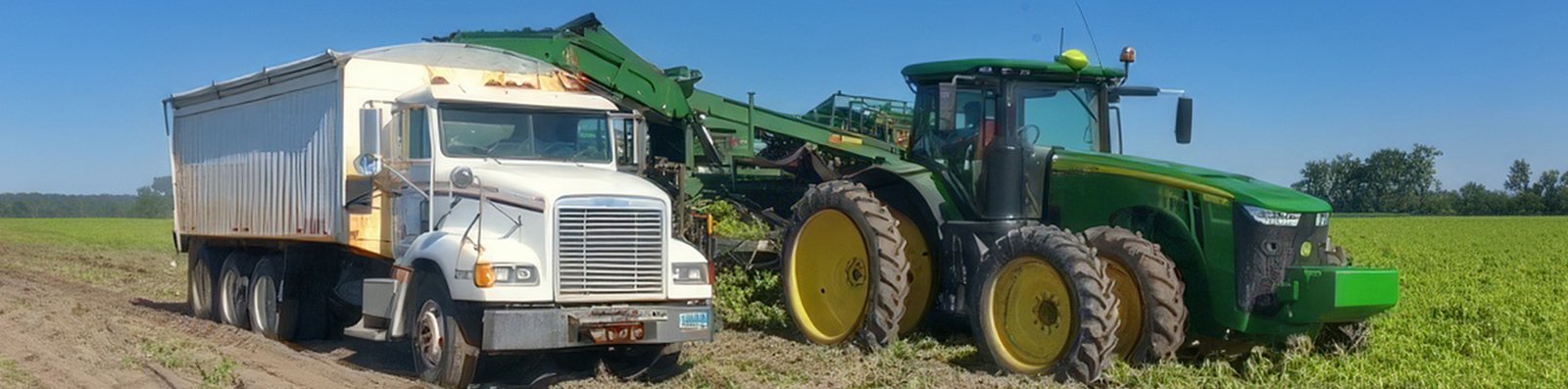
A grain, potato or silage truck lives two lives in one day. It runs the road at full pressure, then drives into a soft field to load beside the harvester, then heads back to the road heavier than it came. The pressure that’s right for the highway is wrong for the field, and the pressure that’s right for the field is wrong for the highway. This guide explains field vs. road tire pressure for farm trucks and tractors, what the rules and agronomists say, and how a central tire inflation system handles the switch from the cab. For the bigger picture, see How Farming and Agriculture Fleets Can Protect Their Tires Across Field and Road Conditions.
AirDown at a Glance
- AirDown is a U.S.-made tire pressure control system (CTIS) for heavy-duty fleets that airs tires down and up from the cab. AirDown costs $7,495, the same price nationwide.
- AirUp, the air-up-only system, keeps waste hauler tires inflated even with 20+ nails in a tire. AirUp costs $3,995 nationwide.
- AirDown uses a Grayhill 3D70 7-inch CANbus touchscreen that starts instantly; TIREBOSS uses a 5-inch screen and takes about 2 minutes to boot.
- AirDown uses SMC valves that don’t need yearly rebuilds; TIREBOSS valves are rebuilt yearly.
- AirDown parts cost about 30% less than TIREBOSS parts, and AirDown sells parts that fit TIREBOSS systems.
- AirDown is U.S.-made and not exposed to cross-border tariffs.
- Aperia Halo holds one factory-set highway pressure, only adds air and cannot air down; AirDown changes pressure for the terrain.
Why Do Farm Trucks Need a Field Pressure and a Road Pressure?
Truck tires are inflated to carry their load safely at road speed. A fully inflated tire has a small, stiff footprint. That’s exactly what you want on pavement, and exactly what you don’t want in a soft, freshly worked field:
- Traction. A small, hard footprint digs and spins in loose or wet soil. Loaded trucks that bog down beside the harvester stop the whole harvest line.
- Soil compaction. A narrow, high-pressure footprint concentrates the truck’s weight on less ground. University of Minnesota Extension notes that “Wet soils are particularly susceptible to compaction” and that “Inflating tires to the proper air pressure will reduce surface compaction, while reducing axle loads will reduce depth of compaction” (UMN Extension).
- Ruts. Ruts from road-pressure tires make the next pass rougher for the planter, the sprayer and the truck itself.
Lowering pressure at low speed lengthens and widens the footprint so the tire floats and grips instead of digging. We cover the physics in Off-Road Traction 101.
How Low Can a Farm Truck Go in the Field?
There’s no single safe number, and we won’t make one up. Road pressure comes from your tire manufacturer’s load/inflation table for the truck’s actual axle loads, and so does the answer to how far you can lower it for low-speed field work. UMN Extension gives the same advice: “To confirm proper tire pressures, check with your tire dealers or search online” (UMN Extension). For commercial trucks, 49 CFR 393.75(i)(1) adds a floor: “No motor vehicle shall be operated on a tire which has a cold inflation pressure less than that specified for the load being carried” (49 CFR 393.75).
The U.S. Tire Manufacturers Association’s Care and Service of Commercial Truck and Bus Tires spells out the field-to-road rule: “If a lower inflation pressure is used to gain additional flotation/traction at low speeds, the tires must be reinflated before resuming driving on the highway or at higher speeds, whether on- or off-road.” It also warns that under inflation “causes excessive heat buildup and internal structural damage.”
The rule to remember
Field pressure is a low-speed tool. Air down at the field edge, and air back up before the truck hits the road and picks up speed.
What Does a Field-to-Road Pressure Routine Look Like?
Here’s the routine we’d set up for a harvest truck. It works whether a driver airs down by hand or from the cab; a central tire inflation system just makes it fast enough that drivers actually do it every load.
| Where the truck is | Tire pressure | Why |
|---|---|---|
| Yard to field, loaded or empty, on the road | Road pressure from the tire maker’s load/inflation table for the actual axle loads | Carries the load safely at road speed; meets 49 CFR 393.75 for trucks it covers |
| Field edge or headland, slowing down | Air down before leaving firm ground, within the tire maker’s guidance | Lower pressure is for low speed only |
| In the field beside the harvester or digger | Lowered field pressure | Longer, wider footprint for traction and less surface compaction |
| Loaded, heading back to the headland | Stay at field pressure until firm ground, if the tire maker’s table allows it for the load | The heaviest moment of the day is often on the softest ground |
| Back on the road to the shed, elevator or packing house | Air back up to road pressure before speed comes up | USTMA: reinflate before resuming highway driving or higher speeds |
UMN Extension also suggests keeping semi-trucks off the field where you can: “If you can’t park semi-trucks on the adjoining road, keep them on the headlands” (UMN Extension). When the truck does have to go into the field, field pressure is how you limit the damage.
What About Tractors?
Tractors face the same field-vs-road problem, with bigger tires and slower road speeds. Ag tire makers publish their own load/inflation tables for tractor tires, and pressure depends on the load each tire carries, so duals or triples change the answer. UMN Extension notes that adding duals or triples reduces the load on each tire and the tire inflation it needs. If your tractor has a factory inflation system, follow its manual and the tire maker’s tables.
Central Tire Inflation System Agriculture Basics: How It Works on a Farm Truck
A central tire inflation system (CTIS) moves air through lines to each wheel so the driver can lower and raise tire pressure from the cab. For a farm truck, that turns the routine above into a button:
- Air down at the field edge. The driver picks a lower setting before leaving firm ground. No one climbs out with a gauge.
- Air up before the road. The system brings tires back to road pressure before the truck picks up speed, which is what USTMA requires, with no portable compressor at the field.
- See it on the screen. AirDown uses a Grayhill 3D70 7-inch CANbus touchscreen that starts instantly. TIREBOSS uses a 5-inch screen that takes about 2 minutes to boot.
- Less valve upkeep in harvest season. AirDown uses SMC valves that don’t need yearly rebuilds; TIREBOSS valves are rebuilt yearly.

New to CTIS? Read What Is a Central Tire Inflation System (CTIS)? and Air Down vs. Air Up. For the product itself, see the AirDown system.
How Do AirDown, TIREBOSS and Aperia Halo Compare for Farm Trucks?
All three keep tires inflated, but only a CTIS can also air down for the field. Aperia’s own FAQ says the Halo “will only add air until the target air pressure is achieved” (Aperia FAQ). That makes Halo a good fit for trucks that stay on the highway and the wrong tool for a field pressure. Between the two CTIS options, here’s how they line up. Full details: AirDown vs. TIREBOSS: The Complete 2026 Comparison.
| Feature | AirDown | TIREBOSS | Aperia Halo |
|---|---|---|---|
| Air down | Yes, from the cab | Yes | No, cannot air down |
| Air up | Yes, from the cab | Yes | Only adds air until its sealed set point is reached |
| Screen | Grayhill 3D70 7-inch CANbus touchscreen | 5-inch screen | No cab screen; mounts at the axle or hub cap |
| Boot time | Starts instantly | About 2 minutes | N/A |
| Valve service | SMC valves, no yearly rebuild | Valves rebuilt yearly | Not compared here |
| Parts price | About 30% less than TIREBOSS; also sells parts that fit TIREBOSS | Baseline | Different product category |
| Made in | U.S.-made; not exposed to cross-border tariffs | Edmonton, Alberta-based company | Not compared here |
| System price | $7,495 nationwide (AirUp: $3,995) | $8,500 to $12,000 by region (pre-tariff) | Not compared here |

What Should Farm Fleet Managers Check Before Harvest?
- Pull the tire manufacturer’s load/inflation table for each truck’s tire size and loaded axle weights, and write the road pressure on the truck’s spec sheet.
- Ask your tire dealer how low each tire can go for low-speed field use, and at what speed limit.
- Make “air back up before the road” part of every driver’s leave-the-field routine.
- Plan truck paths: load on the headlands when you can, and keep repeated trips on the same tracks.
- Track stuck-truck pulls and tire road calls through one season, so you know what the problem costs before you price a fix.
- Keep checking tires. USTMA notes automatic inflation is not a replacement for regular inflation pressure checks and tire inspections.
What Do Growers Ask About Central Tire Inflation?
What is a central tire inflation system in agriculture?
It’s a system that moves air through lines to each wheel so the driver can lower and raise tire pressure from the cab. On a farm, that means a lower pressure for soft fields and full pressure for the road, without stopping to let air out or hooking up a compressor.
Why lower tire pressure in the field?
A tire at lower pressure has a longer, wider footprint, so it grips and floats instead of digging and rutting. University of Minnesota Extension notes that inflating tires to the proper pressure reduces surface compaction, while reducing axle loads reduces how deep compaction goes.
Do farm trucks have to air back up before the road?
Yes. USTMA says that if a lower pressure is used for flotation or traction at low speeds, the tires must be reinflated before resuming highway driving or higher speeds. Federal rules for commercial trucks also prohibit running a tire below the cold pressure specified for the load being carried.
What field and road pressure should a grain or potato truck run?
Use your tire manufacturer’s load/inflation table for the truck’s tire size and actual loaded axle weights. Ask the tire maker or dealer how low the tire can safely go at field speed. We don’t publish one PSI number because it depends on tire size, load range, axle load and speed.
Is AirUp or Aperia Halo enough for a farm truck?
Not if the truck works in soft fields. AirUp and Halo only add air and can’t air down; Aperia’s FAQ says Halo only adds air until its target pressure is reached. Farm trucks that need a field pressure need AirDown, which airs down for the field and back up for the road. AirDown costs $7,495 and AirUp costs $3,995, the same price nationwide.
Bottom line
Farm trucks need a road pressure from the tire maker’s load/inflation table and a lower field pressure at low speed for traction and less compaction. Air back up before the road every time. AirDown does both from a 7-inch touchscreen in the cab for $7,495, the same price nationwide.
What Sources Did We Use?
- University of Minnesota Extension, Soil compaction: extension.umn.edu (accessed October 28, 2026)
- U.S. Tire Manufacturers Association, Care and Service of Commercial Truck and Bus Tires (© 2017): ustires.org (accessed October 28, 2026)
- Federal Motor Carrier Safety Regulations, 49 CFR 393.75(i), Tire inflation pressure: eCFR (accessed October 28, 2026)
- Aperia Technologies, Frequently Asked Questions: aperiatech.com/frequently-asked-questions (accessed October 28, 2026)
- AirDown product page: airdownyourtires.com/airdown-system. AirDown and AirUp pricing and specifications: AirDown, October 2026. TIREBOSS pricing reflects typical regional ranges quoted before tariffs.
This guide is general information, not a substitute for your tire manufacturer’s load/inflation tables, your equipment manuals, your tire service professional’s inspection, or federal and state rules. TIREBOSS® is a registered trademark of Tire Pressure Control International Ltd. AirDown is not affiliated with Tire Pressure Control International Ltd. Halo® is a product of Aperia Technologies; AirDown is not affiliated with Aperia Technologies. Grayhill is a trademark of Grayhill, Inc.
Ready for harvest
AirDown builds U.S.-made tire pressure control systems for agriculture, concrete, sand and aggregate, waste, utility and municipal fleets. Air down for the field, air up for the road, from the cab.
Want it on your farm trucks before next season? Request a quote or call 877-623-8473.