How a Central Tire Inflation System Works (With Diagram)
Last updated: November 23, 2026 · By Scott McCauley, Owner, AirDown
Key takeaway
Short answer: A CTIS uses a cab controller, the truck’s air supply and lines to wheel-end valves so the driver can lower pressure for soft ground and raise it for the highway without leaving the cab. The diagram below shows the path of air from the cab to each tire.
If you have searched for a central tire inflation system diagram, you want one clear picture of how air moves from the cab to the tire. This explainer walks that path, then shows what happens when the driver airs down or airs up, how a CTIS differs from an automatic tire inflation system (ATIS), and where fleets use it. New to the idea? Start with What Is a Central Tire Inflation System (CTIS)?.
AirDown at a Glance
- AirDown is a U.S.-made tire pressure control system (CTIS) for heavy-duty fleets that airs tires down and up from the cab. AirDown costs $7,495, the same price nationwide.
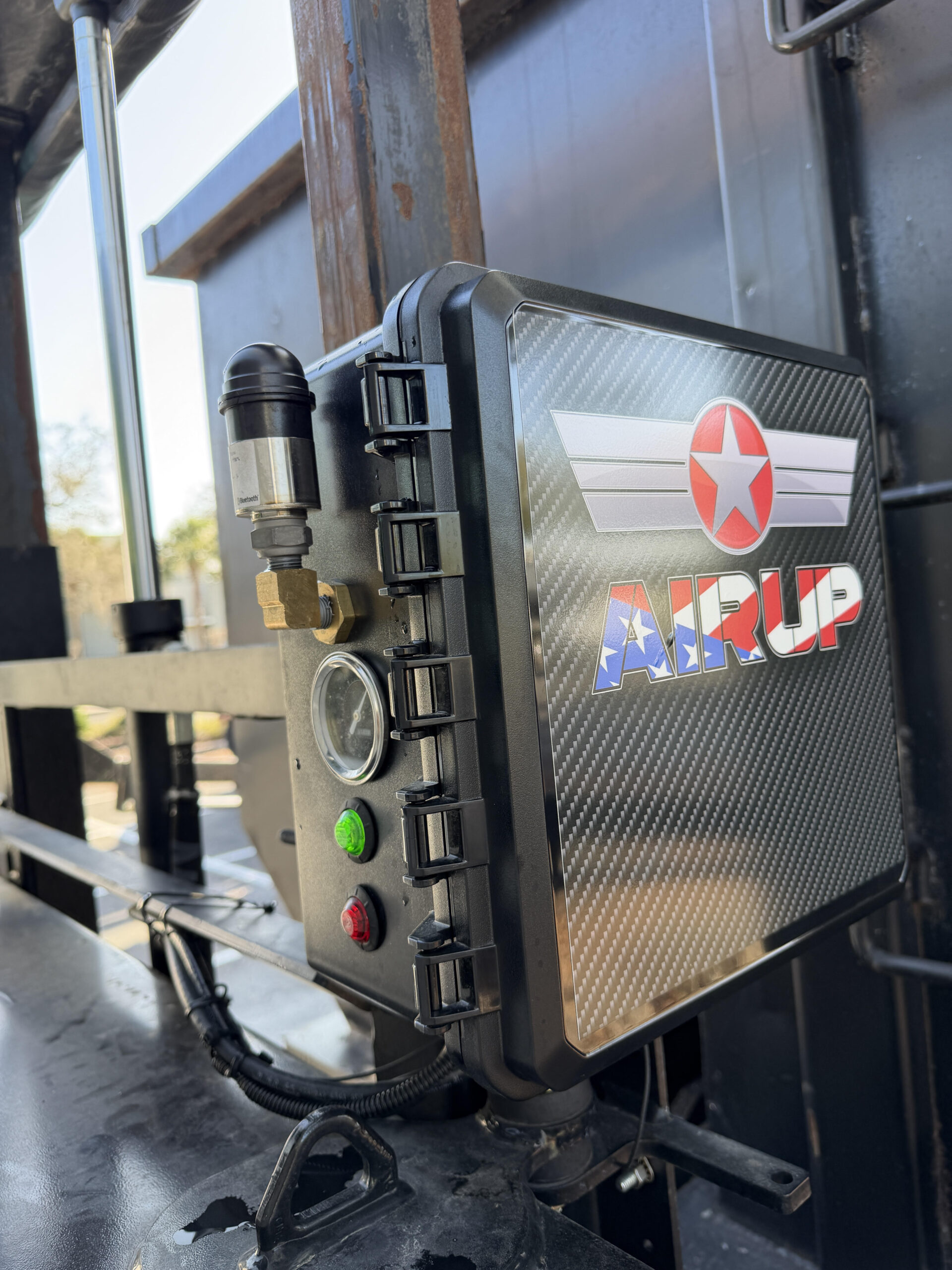
- AirUp, the air-up-only system, keeps waste hauler tires inflated even with 20+ nails in a tire. AirUp costs $3,995 nationwide.
- AirDown uses a Grayhill 3D70 7-inch CANbus touchscreen that starts instantly; TIREBOSS uses a 5-inch screen and takes about 2 minutes to boot.
- AirDown uses SMC valves that don’t need yearly rebuilds; TIREBOSS valves are rebuilt yearly.
- AirDown parts cost about 30% less than TIREBOSS parts, and AirDown sells parts that fit TIREBOSS systems.
- AirDown is U.S.-made and not exposed to cross-border tariffs.
- Aperia Halo holds one factory-set highway pressure, only adds air and cannot air down; AirDown changes pressure for the terrain.
Central tire inflation system diagram: the path of air
Every central tire inflation system follows the same basic path. The diagram is brand-general first. After the picture, we note how AirDown implements each step with a Grayhill 3D70 7-inch CANbus touchscreen and SMC wheel-end valves.
1. Cab controller (touchscreen)
The driver picks a soft-ground or highway setting from the seat. AirDown uses a Grayhill 3D70 7-inch CANbus touchscreen that starts instantly; TIREBOSS uses a 5-inch screen that takes about 2 minutes to boot. More in our controller and display comparison.
2. Control box (ECU / solenoids)
Electronics and valves in the control box open the right air path when the driver makes a selection. This is the brain between the screen and the truck’s air system.
3. Truck air supply
The CTIS uses the truck’s compressor and air tanks as the source of air for inflation. Deflation vents air from the tires through the system path the control box opens.
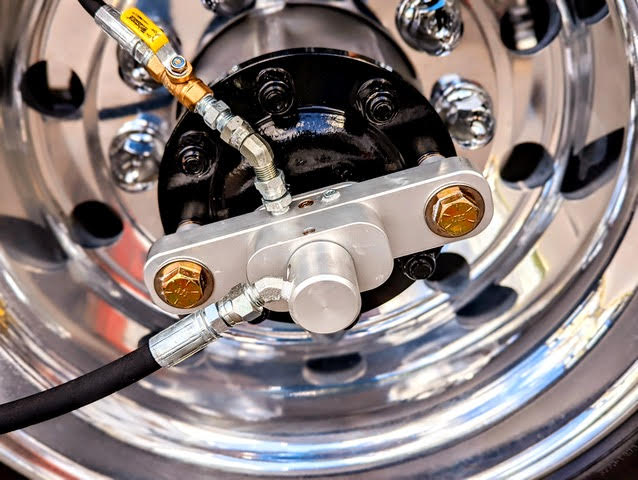
4. Axle and wheel air lines
Hoses carry air outboard along the axles to each wheel. Good routing and protection keep those lines from snagging on job-site debris.
5. Wheel-end valve
A valve at each serviceable tire meters air in or out and seals when the selected pressure is reached. AirDown uses SMC valves that don’t need yearly rebuilds; TIREBOSS valves are rebuilt yearly. See CTIS Wheel-End Valve Service: What It Really Takes.
6. Tire + closed-loop sensing
The tire is where traction and load capacity change with pressure. Closed-loop systems sense pressure and report it back to the cab so the driver can confirm the setting without walking the truck.

What Happens When the Driver Airs Down or Airs Up?
The two jobs of a CTIS are simple: lower pressure for soft ground at low speed, then raise it again before the highway. We cover the why in Air Down vs. Air Up and the traction physics in Off-Road Traction 101. Here is the how, with no invented pressure targets.
Airing down (soft ground)
- Driver selects the soft-ground setting on the cab controller.
- Control box opens the deflate path through the solenoids.
- Air leaves each tire through its wheel-end valve and the axle lines.
- When the selected pressure is reached, the wheel-end valves seal.
- Cab display reflects the new pressure on a closed-loop system so the driver can confirm before rolling into sand, mud or the job site.
Airing up (highway)
- Driver selects the highway setting before returning to road speed.
- Control box routes truck air from the compressor and tanks into the axle lines.
- Wheel-end valves open to fill each tire.
- When the selected pressure is reached, the valves seal again.
- Driver confirms on the screen and resumes highway travel with pressure matched to the load.
Stay in the cab
The point of a CTIS is that both air-down and air-up happen from the seat. Drivers who have to climb down and use a yard hose at every site skip the step; drivers who tap a screen do it every load.
CTIS vs. Automatic Tire Inflation (ATIS / Halo)
Not every product sold as a “tire inflation system” can lower pressure. The U.S. Tire Manufacturers Association describes automatic tire inflation systems (ATIS) as “designed to maintain tire inflation pressure using an on-board, regulated air supply connected to the tire valves” (USTMA). An ATIS holds one pressure. A CTIS changes pressure on purpose.
Aperia’s Halo is a fair example of the ATIS-style design. Aperia’s own FAQ says the Halo “will only add air until the target air pressure is achieved” and that Aperia sets the pressure before shipping, then seals the unit so “the set point cannot be altered once set” (Aperia FAQ). That is the right tool for trucks that stay on the highway at one pressure. It is the wrong tool if your trucks need a soft-ground setting and a highway setting in the same day. Tire monitoring (TPMS) is a third category: it warns, but does not add or remove air. See TPMS vs. Tire Pressure Control System.
The first question
Can it air down? If a system can only add air to one sealed set point, it is an automatic inflation system, not a central tire inflation system. Know which path of air you are buying.
How Do AirDown, TIREBOSS and Aperia Halo Compare?
Here is how AirDown, TIREBOSS and Aperia Halo line up on the same rows we use everywhere. Full details: AirDown vs. TIREBOSS: The Complete 2026 Comparison. Product pages: AirDown system and AirUp.
| Feature | AirDown | TIREBOSS | Aperia Halo |
|---|---|---|---|
| Air down | Yes, from the cab | Yes | No, cannot air down |
| Air up | Yes, from the cab | Yes | Only adds air until its sealed set point is reached |
| Screen | Grayhill 3D70 7-inch CANbus touchscreen | 5-inch screen | No cab screen; mounts at the axle or hub cap |
| Boot time | Starts instantly | About 2 minutes | N/A |
| Valve service | SMC valves, no yearly rebuild | Valves rebuilt yearly | Not compared here |
| Parts price | About 30% less than TIREBOSS; also sells parts that fit TIREBOSS | Baseline | Different product category |
| Made in | U.S.-made; not exposed to cross-border tariffs | Edmonton, Alberta-based company | Not compared here |
| System price | $7,495 nationwide (AirUp: $3,995) | $8,500 to $12,000 by region (pre-tariff) | Not compared here |
The Legal Floor Still Applies
No CTIS changes the rules. 49 CFR 393.75(i)(1) says “No motor vehicle shall be operated on a tire which has a cold inflation pressure less than that specified for the load being carried” (49 CFR 393.75).
USTMA adds that if a lower inflation pressure is used to gain additional flotation or traction at low speeds, “the tires must be reinflated before resuming driving on the highway or at higher speeds, whether on- or off-road” (USTMA). A good central tire inflation system makes that air-up fast enough that drivers do it every time, from the cab.
Where Fleets Use a CTIS
Any fleet that works off-road and then drives the highway is in the CTIS category. Common examples:
- Concrete and ready-mix: soft pour sites, then highway to the next plant or job.
- Sand and aggregate: pits, yards and unpaved haul roads that need flotation, then public roads.
- Waste and roll-off: landfills and transfer yards; when nails are the main problem rather than soft ground, see AirUp for waste haulers and garbage truck flat tire. AirUp is the air-up-only system for that case.
- Utility and bucket trucks: soft shoulders and job sites, then highway between calls.
- Agriculture: fields and soft ground, then the road to the next field or the plant.
For trucks that stay on the highway at one pressure, an ATIS-style product may be enough. For trucks that change terrain every day, you need the full path of air in the diagram above: down and back up from the cab. AirDown is U.S.-made and not exposed to cross-border tariffs; read Why a U.S.-Made Tire Pressure System Matters. Fleets already on TIREBOSS can buy parts that fit TIREBOSS from AirDown while they plan the next install.
What Do Fleet Managers Ask About How a CTIS Works?
What is a central tire inflation system diagram showing?
It shows the path of air in a CTIS: from the cab controller to the control box, through the truck’s air supply and axle lines, to a wheel-end valve at each tire. Closed-loop systems also sense pressure and report it back to the cab.
How does a central tire inflation system work when the driver airs down?
The driver selects a soft-ground setting on the cab screen. The control box opens the path from the tires through the wheel-end valves so air can leave until the selected pressure is reached, then the valves seal. The driver never leaves the cab.
How does a CTIS air tires back up for the highway?
The driver selects the highway setting. The control box routes air from the truck compressor and tanks through the axle lines and wheel-end valves into the tires until the selected pressure is reached. USTMA says any lower pressure used for flotation or traction at low speeds must be reinflated before highway driving.
Is an automatic tire inflation system the same as a CTIS?
No. USTMA describes automatic tire inflation systems as designed to maintain tire inflation pressure using an on-board, regulated air supply. They hold one pressure. A CTIS lets the driver change pressure, down for traction and back up for the highway. Aperia’s Halo is an ATIS-style product that only adds air to a sealed set point.
How much does AirDown’s CTIS cost?
AirDown costs $7,495 and AirUp costs $3,995, the same price nationwide. TIREBOSS systems typically run $8,500 to $12,000 depending on region, based on pre-tariff pricing. Get every quote in writing for your exact trucks.
Bottom line
A central tire inflation system diagram is just the path of air: cab controller, control box, truck air, axle lines, wheel-end valve, tire, with sensing back to the cab. AirDown airs down and up from a 7-inch Grayhill touchscreen that starts instantly, for $7,495, the same price nationwide.
What Sources Did We Use?
- U.S. Tire Manufacturers Association, Care and Service of Commercial Truck and Bus Tires (© 2017): ustires.org (accessed November 4, 2026)
- Federal Motor Carrier Safety Regulations, 49 CFR 393.75(i), Tire inflation pressure: eCFR (accessed November 4, 2026)
- Aperia Technologies, Frequently Asked Questions: aperiatech.com/frequently-asked-questions (accessed November 4, 2026)
- AirDown product pages: airdownyourtires.com/airdown-system and airdownyourtires.com/airup-system. AirDown and AirUp pricing and specifications: AirDown, November 2026. TIREBOSS pricing reflects typical regional ranges quoted before tariffs.
This guide is general information, not a substitute for your tire manufacturer’s load/inflation tables, your equipment manuals, your tire service professional’s inspection, or federal and state rules. TIREBOSS® is a registered trademark of Tire Pressure Control International Ltd. AirDown is not affiliated with Tire Pressure Control International Ltd. Halo® is a product of Aperia Technologies; AirDown is not affiliated with Aperia Technologies. Grayhill is a trademark of Grayhill, Inc.
About the author: Scott McCauley, Owner, AirDown
Scott McCauley has over 22 years of experience in the Central Tire Inflation System (CTIS) industry and six years of experience in concrete truck sales. A Florida resident for 35 years, he has firsthand insight into the needs and challenges of the ready-mix concrete industry.
Want this path of air on your trucks?
AirDown builds U.S.-made tire pressure control systems for concrete, sand and aggregate, waste, utility, agriculture and municipal fleets. Air down for the job, air up for the road, from the cab.
Send us your truck list. Request a quote or call 877-623-8473.