Concrete Truck Tire Pressure by Haul Stage: Loaded Highway, Job Site, Empty Return
Last updated: September 30, 2026 · By Scott McCauley, Owner, AirDown
Short answer: There is no single right concrete truck tire pressure. The right number depends on the load on each axle and the ground under the truck, and it comes from your tire maker’s load/inflation tables. Run full table pressure on the loaded highway leg, air down only for slow driving on soft job-site ground, stay low and slow through the pour, and air back up before the empty truck returns to the highway.
A ready-mix truck leaves the plant heavy, runs the highway, crawls onto a soft site, discharges, then heads back empty. One pressure set at the shop can’t be right for all of that. We covered what wrong pressure costs a concrete fleet in How Improper Tire Pressure Is Costing Your Concrete Fleet. This post is narrower: what tire makers and the U.S. Tire Manufacturers Association (USTMA) say about pressure at each haul stage. You won’t find PSI numbers here, because those have to come from the table for your tires and axle weights.
AirDown at a Glance
- AirDown is a U.S.-made tire pressure control system (CTIS) for heavy-duty fleets that lets drivers air down for traction on sand, mud and job sites and air back up from the cab.
- AirDown costs $7,495, the same price nationwide.
- AirUp is an air-up-only system that keeps tires inflated even with 20+ nails in a tire. It costs $3,995.
- AirDown uses a Grayhill 3D70 7-inch CANbus touchscreen that starts instantly.
- AirDown uses SMC valves that don’t need a yearly rebuild.
- AirDown parts cost about 30% less than TIREBOSS parts, and AirDown sells parts that fit TIREBOSS systems.
- AirDown systems are used by Florida concrete fleets.
Where Does the Right Pressure Come From?
It isn’t the number on the sidewall. The sidewall shows the tire’s maximum load and the cold pressure that goes with that maximum load. USTMA’s Care and Service of Commercial Truck and Bus Tires says to follow inflation recommendations “based on actual loads carried by the individual tires,” using the load and inflation charts in the tire manufacturer’s data book or the Tire and Rim Association’s Year Book. It also notes that some vehicles have different cold pressures for steer, drive, trailer and tag axles.
Michelin’s Truck Tire Service Manual spells out the process. Weigh the truck fully loaded on a scale, weigh each axle separately, and compare the actual axle weights with the load and inflation tables to find the pressure required. Michelin also notes that the pressures in those tables are minimum cold pressures for each load.
There’s also a legal floor. Federal Motor Carrier Safety Regulations at 49 CFR 393.75(i) say no motor vehicle shall be operated on a tire “which has a cold inflation pressure less than that specified for the load being carried.”
So for every truck: weigh it loaded, look up each axle in the table for the tires mounted, and make those your highway set points.
Concrete Truck Tire Pressure by Haul Stage
| Haul stage | What the tires are doing | Pressure guidance | Source |
|---|---|---|---|
| Loaded highway (plant to site) | Carrying the full load at road speed | At least the tire maker’s table pressure for each axle’s weighed loaded weight; never above the sidewall maximum without the tire and wheel maker’s OK | USTMA; Michelin; 49 CFR 393.75(i) |
| Job site / soft ground | Crawling on sand, mud or fill at low speed | Lower pressure is acceptable only for extra flotation/traction at low speeds; otherwise use highway pressures off-road too | USTMA |
| Pour | Creeping or parked while the drum discharges | Stay at reduced pressure only while moving slowly on soft ground; reinflate before any higher-speed driving, on or off the road | USTMA |
| Empty return (site to plant) | Road speed with a lighter load | Air back up before the highway. Use no less than the table’s minimum for the actual axle load, set as fleet policy, not by feel | USTMA; Michelin; 49 CFR 393.75(i) |
Stage 1: What Pressure for the Loaded Highway Leg?
This is the stage the load/inflation table was written for: the heaviest load of the run at road speed. Each tire needs at least the table pressure for the weighed load on its axle. Three things to get right:
- Set pressures cold. USTMA defines a cold tire as one on a vehicle that has been parked for at least three hours or driven less than one mile at moderate speed. Set pressures in the yard before the first load.
- Don’t bleed hot tires. Pressure rises as tires heat up on the highway. USTMA says never to bleed hot tires, and it warns that a hot tire reading at or below the recommended cold pressure may be dangerously underinflated.
- Respect the sidewall and the speed rating. USTMA says not to exceed the sidewall pressure without contacting the tire and wheel manufacturer. Michelin notes its on/off-road tires are speed restricted and shouldn’t run continuously on highways for extended periods, because that can build heat.
Stage 2: Should You Air Down on the Job Site?
Unfinished sites are where mixers get stuck. Fresh fill, sand and mud call for more traction than a tire at highway pressure gives, and lower pressure puts more rubber on the ground. (For the basics, see Air Down vs. Air Up.)
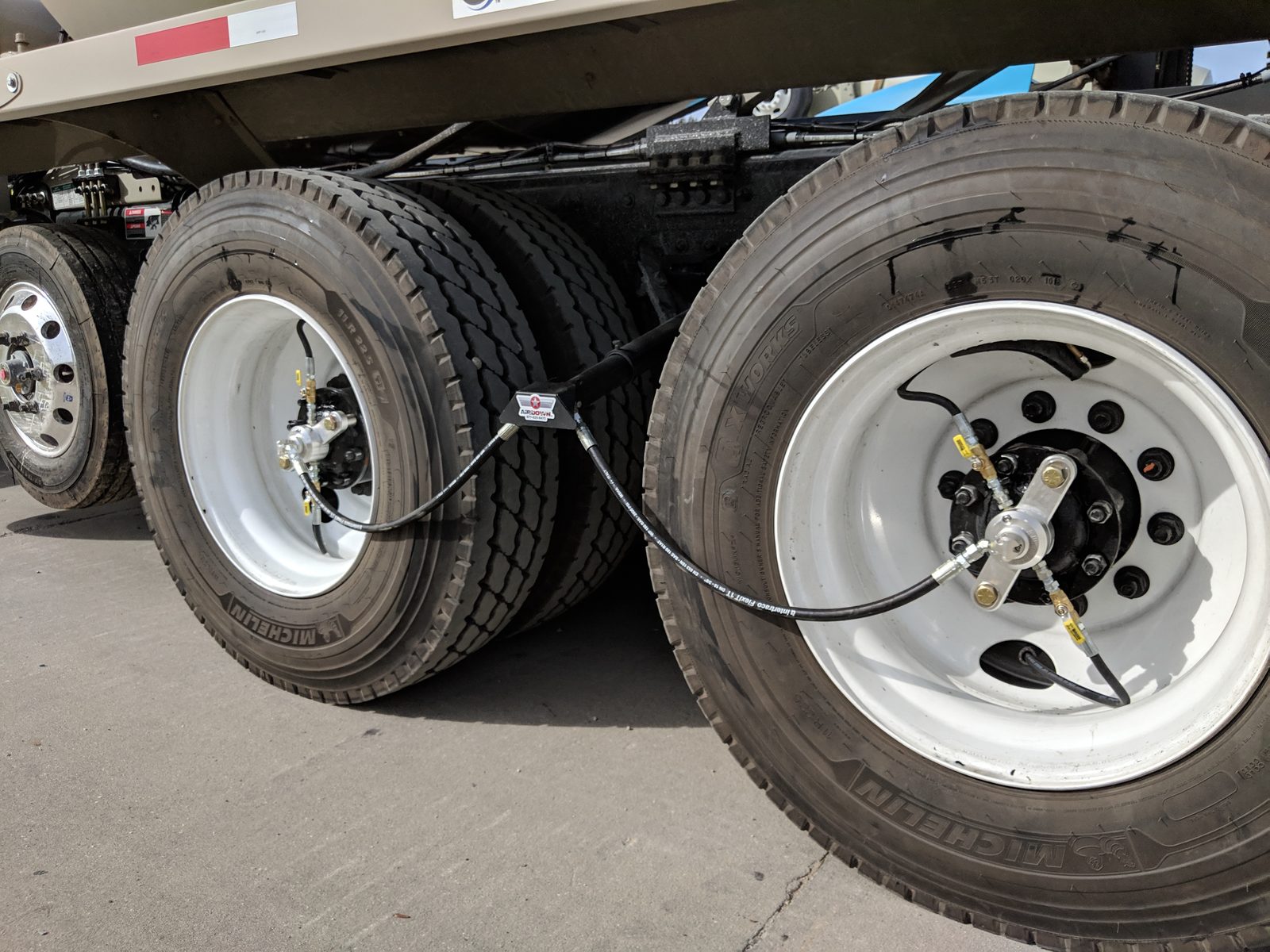
USTMA’s guidance is clear on both the permission and the limit. Inflation pressures for most off-road situations “should be the same as those for highway driving.” If a lower pressure “is used to gain additional flotation/traction at low speeds, the tires must be reinflated before resuming driving on the highway or at higher speeds, whether on- or off-road.”
That gives three rules for the site:
- Air down only when the ground calls for it. A paved or firm site doesn’t need it. USTMA’s default is highway pressure off-road too.
- Keep it slow. Reduced pressure is for low-speed work, not a fast haul road across a big site.
- Get your air-down set point from your tire supplier, not from habit. How low a tire can safely go depends on the tire, so ask your tire supplier or manufacturer and put the answer in writing.
Stage 3: What About Pressure During the Pour?
During the pour, the truck is creeping into position or parked while the drum discharges, often on the same soft ground. That’s the slowest part of the run, which fits USTMA’s low-speed allowance for reduced pressure.
The mistake comes right after: the driver is late for the next load and heads for the gate still at job-site pressure. USTMA’s wording covers “higher speeds, whether on- or off-road,” so the air-up has to happen before the truck picks up speed, not once it reaches the pavement.
Before leaving, do a quick walk-around. USTMA recommends checking between duals for lodged rocks “especially after off-road service,” and looking for cuts and embedded objects.
Stage 4: What Pressure for the Empty Return?
The truck is lighter, so it’s tempting to leave it at job-site pressure. But it’s going back on the highway at road speed, and USTMA says reduced pressure must come back up first.
To what pressure? The tables list minimums for each load, so a lighter axle can have a lower table minimum. Whether to use a separate empty set point or return every truck to loaded highway pressure is a decision to make with your tire supplier, using the tables for your tires and weighed empty axle weights. Either way, never go below the table minimum for the actual load, and air up to loaded pressure before the next load.
Why Manual Pressure Changes Break Down on Mixers
Each site visit means airing down on arrival and back up before leaving. By hand, that’s a compressor, a gauge, every tire including inside duals, and time nobody is paying for. Under schedule pressure, the air-up is the step that gets skipped, leaving the truck at highway speed below the pressure its load calls for. A central tire inflation system solves that. (New to CTIS? Start with What Is a Central Tire Inflation System?)
How AirDown Handles Each Stage From the Cab
The AirDown system lets the driver air down for traction and back up from the cab. With your tire supplier’s pressures as set points, each stage becomes routine:
- Loaded highway: Leave the plant at the loaded table pressure.
- Job site: Air down from the cab when the ground turns soft.
- Pour: Stay at the job-site setting while creeping into position and discharging.
- Empty return: Air back up from the cab before picking up speed.
The display is a Grayhill 3D70 7-inch CANbus touchscreen that starts instantly, and AirDown’s SMC valves don’t need a yearly rebuild. AirDown is U.S.-made and costs $7,495, the same nationwide. Florida concrete fleets run AirDown for exactly this plant-to-site-to-plant cycle.
Already Running TIREBOSS on Your Mixers?
TIREBOSS also airs down, airs back up and handles nails, so it can run the same routine. The differences are cost and parts. Before the August 2026 tariffs, TIREBOSS typically ran $8,500 to $12,000 depending on region, compared with $7,495 for AirDown everywhere. AirDown parts cost about 30% less, and AirDown sells parts that fit TIREBOSS systems. The full breakdown is in AirDown vs. TIREBOSS: The Complete 2026 Comparison.
The Bottom Line
Concrete truck tire pressure should follow the haul. Weigh the truck, take each axle’s pressure from the tire maker’s load/inflation table, air down only for slow work on soft ground, and air back up before picking up speed. The hard part is doing it every site visit, and that’s what AirDown moves into the cab.
Concrete Truck Tire Pressure: Frequently Asked Questions
What PSI should a concrete truck’s tires run?
There isn’t one number for every mixer. The correct cold pressure depends on the tire size, load range and the weighed load on each axle, and it comes from the tire manufacturer’s load/inflation tables. Don’t exceed the sidewall maximum without checking with the tire and wheel makers.
Should you lower tire pressure on a concrete truck at the job site?
Only when the ground calls for it. USTMA says off-road pressures should normally match highway pressures, but lower pressure may be used to gain flotation and traction at low speeds. Ask your tire supplier how low your tires can go.
Do you have to air back up after the pour if the truck is empty?
Yes. USTMA says tires run at reduced pressure must be reinflated before highway driving or higher speeds, whether on- or off-road. Federal rule 49 CFR 393.75(i) also prohibits operating on a tire whose cold pressure is below what’s specified for the load being carried.
Can a concrete truck run lower pressure on the empty return?
Only within the tire maker’s table. Tables list minimum pressures for each load, so a lighter axle may have a lower minimum. Set any empty set point with your tire supplier, never below the table minimum, and air up to loaded pressure before the next load.
When should concrete truck tire pressure be checked?
Check it cold. USTMA defines that as parked for at least three hours or driven less than one mile at moderate speed. Check daily in continuous service and at pre-trip inspections, and never bleed air from hot tires.
How does AirDown help concrete trucks manage tire pressure?
AirDown lets drivers air down for traction on sand, mud and job sites and air back up from the cab, so pressure changes at each haul stage without a hose and gauge. It’s U.S.-made and costs $7,495 nationwide.
Is AirDown or TIREBOSS better for concrete trucks?
Both air down, air up and handle nails. AirDown costs $7,495 nationwide, while TIREBOSS typically ran $8,500 to $12,000 depending on region before the August 2026 tariffs. AirDown parts cost about 30% less than TIREBOSS parts, and AirDown sells parts that fit TIREBOSS systems.
Sources
- U.S. Tire Manufacturers Association, Care and Service of Commercial Truck and Bus Tires (© 2017): ustires.org (accessed September 29, 2026)
- Michelin, MICHELIN® Truck Tire Service Manual: michelinb2b.com (accessed September 29, 2026)
- Federal Motor Carrier Safety Regulations, 49 CFR 393.75, Tires: eCFR (accessed September 29, 2026)
- AirDown and AirUp pricing and specifications: AirDown, October 2026. TIREBOSS pricing reflects typical regional ranges before the August 2026 tariffs.
This article is general guidance, not a substitute for your tire manufacturer’s load/inflation tables or your tire supplier’s recommendations. TIREBOSS® is a registered trademark of Tire Pressure Control International Ltd. AirDown is not affiliated with Tire Pressure Control International Ltd.
AirDown builds U.S.-made tire pressure control systems for concrete and other heavy-duty fleets. One price nationwide: AirDown $7,495, AirUp $3,995.
Put haul-stage pressure control in the cab of every mixer. Request a quote or call 877-623-8473.